 Matt Ruta
I Underestimated the Ski Trab TR1 Binding

I think I owe Ski Trab an apology. I’ve never been a big fan of hybrid bindings and I assumed that trend would continue with the TR1. I thought it was probably too heavy and I was pretty sure it would be a hassle to use. I assumed that I wouldn’t be able to notice enough of a difference between it and my beloved Titan Vario 2.0. They sent it to me anyway and, spoiler alert: I was wrong.
As many readers know, I’m an athlete and ambassador for Ski Trab. Consider this my personal experience and opinion rather than an impartial review. That said, nobody asked or paid me to write this and I’m not going to recommend any gear that I wouldn’t use myself. It’s not my style. I haven’t seen much info online about these bindings (especially in English) so I hope my thoughts will help someone out.
Although I’ve tried most models on the market at one point or another, I haven’t actually owned a hybrid binding since my very first touring setup. That was a brick of a frame binding that compromised far too much on both ascent and descent for me to ever recommend it to anybody. Maybe that experience has shaped my philosophy on bindings, which is fairly binary. I typically run ultralight, skimo style bindings on all of my touring skis and beefy, all metal alpine race bindings in the resort. Why compromise on the thing you’re spending the majority of your day doing, whether that’s ascending or bombing downhill? Besides, modern lightweight bindings ski reasonable snow at reasonable speeds really, really well.


My backcountry quiver typically skews to the lighter side.
So when I received a pair of TR1 hybrid bindings in the mail, I wasn’t that excited about it. Don’t get me wrong, they’re clearly built very well and full of clever engineering. I liked looking at them! I just didn’t think I was going to use them very much, and I hate letting perfectly good gear sit there collecting dust. But of course since I had the bindings I was going to at least give them a try. Skiuphill mounted them up for me on some Neve 104’s and I headed for the ski hill to test them out in the adjacent slackcountry.
When I ski the slack, I typically take the same, very direct route through the resort every time. That’s because while I genuinely like ripping hardpack on my alpine setup, skiing firm bumps and chunder in backcountry gear isn’t that enjoyable. It brings out all the worst characteristics of the metal on metal boot-binding interface, exposing the slightly looser fit of my touring boots vs my alpine ones and making for hard work to keep the skis under control. Soft snow fixes all of these problems of course, but that day the hill was scraped practically back to dry ground, so I took the usual route to get the firm stuff over with. That’s when I noticed something weird. I was having fun.
Fascinating. So I took another gondola lap that confirmed my suspicions (and then a few more laps to be sure). These bindings feel like alpine bindings. Full stop. I was skiing rock solid bumps at close to full speed, toes unlocked and having a blast. The boot-binding interface is impressively rigid while cutting a ton of chatter, with what feels like better power transfer than some MNC alpine bindings I’ve used. Maybe the guys at the factory had a point. Right away I got myself into trouble (I was still skiing ~1500g boots and skis after all) and took a decent tumble, during which the bindings released laterally in exactly the way I’d expect an alpine binding to. Not a scientific test by any stretch of the imagination but certainly a good sign. The crew down at skimo.co has tested the release much more scientifically on these using their Jetbond machine, and they report it to be “remarkably accurate and consistent, unlike some others in this category”.

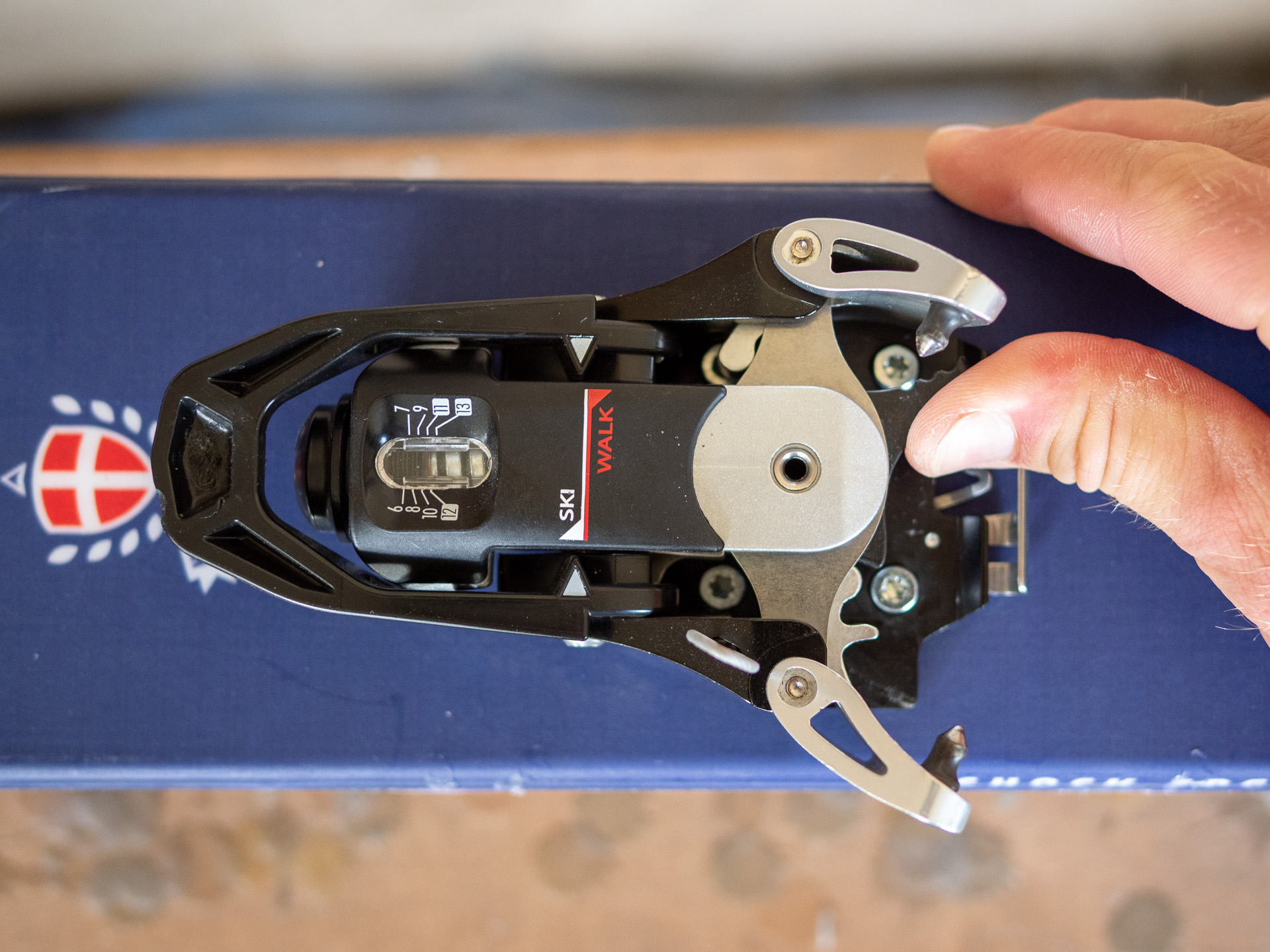
I’ve played with the TR1s a good bit on the workbench. Right away I was impressed by the range of toe elasticity and clever tandem lateral mechanism that keeps both pins in contact with the boot until release. You can see how the pins have been shaped to accommodate this. They’re also metal where it counts, including the heel clamp. Solid.
I skied the TR1s a number of days at after that, getting acquainted with the unique step in and exit sequence. Other hybrid bindings are typically just as convoluted in their own way but for a guy who’s used to skimo race gear it all takes some getting used to. I realized pretty quickly though, that despite the added complexity they never seem to ice up. After trying other hybrid bindings I honestly assumed that anything in this category would, but they’re cleverly designed to shed snow from their contact points. Like Trab’s other bindings, the toe also rests closed – meaning they’re effectively self-clearing.
By spring, I was comfortable enough with the system to bring it with me to the Yukon on a human powered spine skiing trip near the Alaska border. I could not have found a better test environment. Long days and consequential lines on a work trip with a photographer and writer who were both relying on me to do my job so they could do theirs. No time for faffing or equipment failure. The setup turned out to be perfect. I had the confidence to charge, even in weird snow – which was plentiful. I could ski the toes unlocked in no fall situations where I usually wouldn’t dare, with no fear of pre-releasing. That alone was a safety boost on this kind of trip, skiing hard in a remote area.
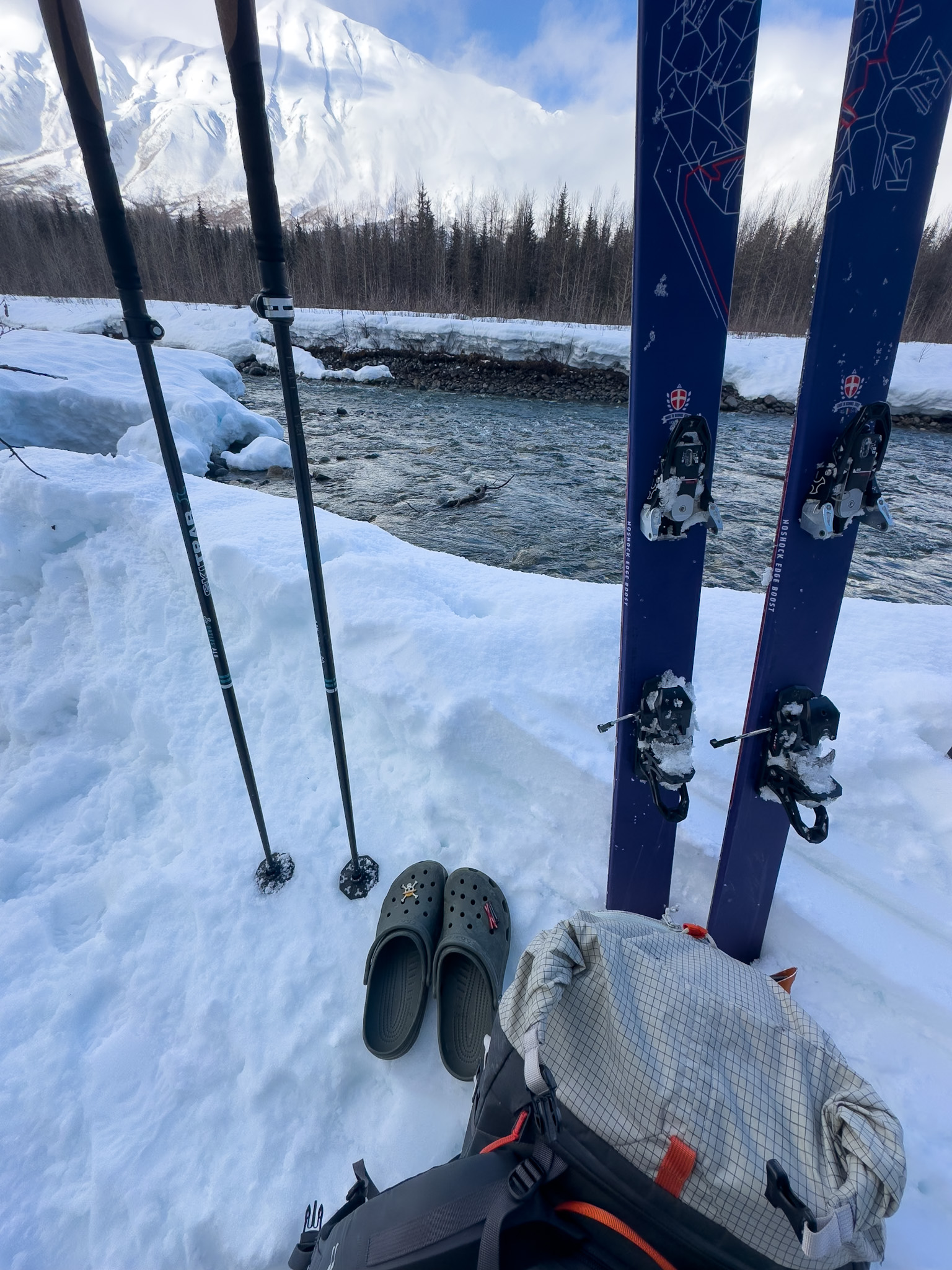


While they’re not particularly light bindings at 685g apiece, they’re very competitive in the category (for reference a Titan Vario 2.0 is 279g while the hybrid benchmark Salomon Shift2 is a whopping 900g). More importantly, they’re just light enough to ski 1500-2000m days without bothering me. I also experienced zero icing or operation issues, despite the spring, maritime snowpack’s tendency to freeze to absolutely everything. In fact, mine were the only bindings on the trip that never needed a thorough cleaning with some kind of tool to restore critical functionality.
At the end of the day the TR1 is a terrific binding for hard charging in the backcountry, pushing a bigger ski around or a mixed resort and backcountry setup. They strike a nice balance between feeling like an alpine binding (and a solid one at that) and walking, honestly, pretty well. I trust their release more than any lightweight tech binding and I can’t get them to ice up or misbehave no matter how hard I try.
Ski Trab calls them “a real binding” in their marketing material and, yeah, that’s how they ski. They’re kind of heavy compared to my usual backcountry bindings – there’s no getting around that – and, like all hybrids, they come with quirky transitions. But, since they’re just light enough and the quirky transitions work every time, the tradeoff is worth it more often than I would have guessed. I think they’re pretty underrated in the North American market.
The conclusion? Despite my initial reservations, I’m happy to have a pair in the quiver and I’m resolving to be more open minded from now on. Bindings sure have come a long way since my old, 1400g frame monstrosities!
 Matt Ruta