 Matt Ruta
Icefall North with the Dream Team
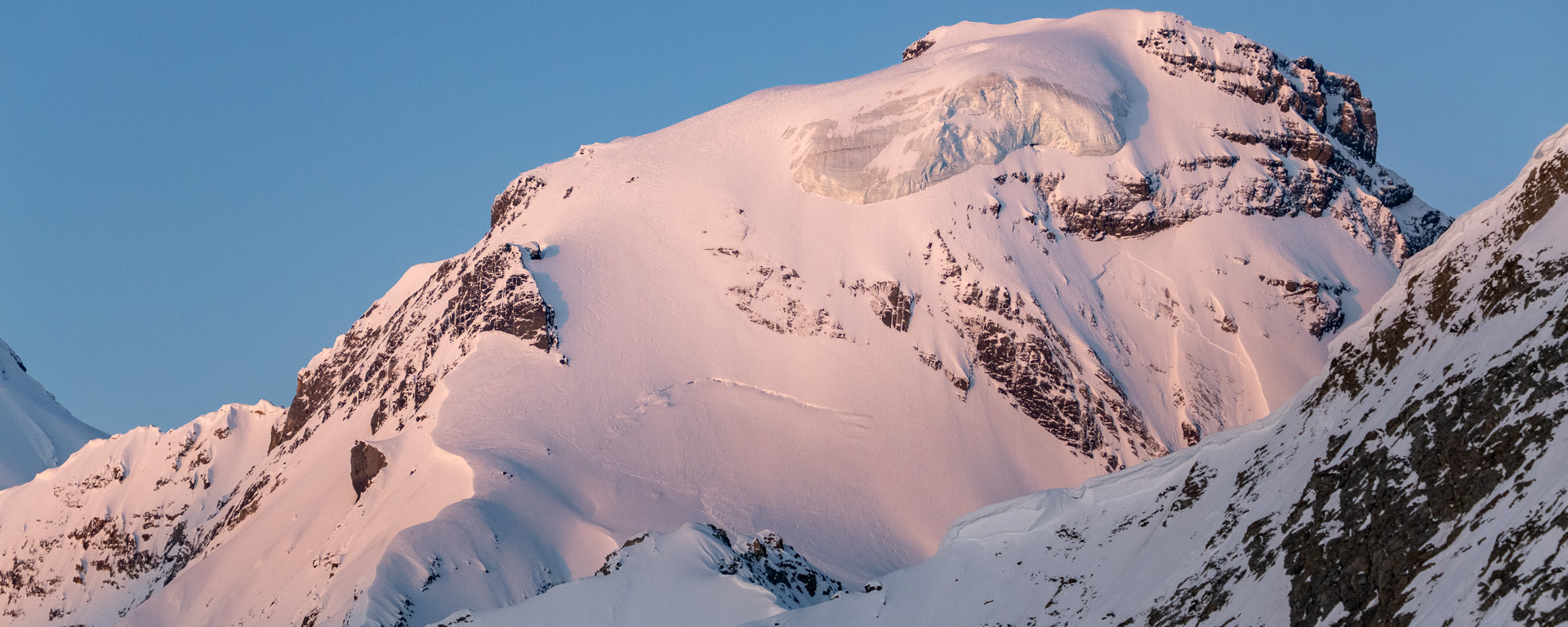
I’ve long admired the resumes and skills of guys like Andrew McNab, Marcus Waring and Ali Haeri. These are names that appear over and over in the Rockies and beyond, whether as first descentionists in mountaineering literature, guides accompanying well known pros and productions or just whispers around a campfire or at a ski town dive bar. So when all three of them invited me along on a trip into the Kinbasket lake area, the only reasonable response was “yes”.
We actually had Mt. Bryce in mind right up until we started driving into the bush. It was a little early in the season though and we had no good way of knowing whether it was ready yet. The high peaks always take longer to cook and exactly what that means varies considerably from year to year. We were deep in baseless speculation when all of a sudden Ali pulled out a recent photo of the reportedly unskied north face of Icefall Peak, shot from a helicopter ride out of nearby Icefall Lodge. I perked up the instant I saw it. Nearly every photo I’ve seen of the face has been riddled with streaks of ice, and even Trevor Sexsmith backed off of it during his ridiculous solo linkup of Rostrum and Icefall in 2016.
We stopped at the Valenciennes river to think on it and see what the water had to say on the matter. I’d done a good amount of research on this line in anticipation of just such an occasion, so I felt good about getting it done. Ali also works at Icefall Lodge regularly and has a good knowledge of the area. The others agreed that it would be a shame to waste known good conditions and so up the Valenciennes road we went. Briefly.
A series of very frequently performing slide paths cross the road early on and we only made it about 3 clicks further before our way was blocked. Good thing we had bikes. Even without slide debris the Valenciennes is slowly being reclaimed by the river and various other streams of water pouring off the surrounding mountains so it would have been slow going in the truck anyway. It’s only an hour and a half or so of riding to get to the Rostrum valley and it feels a lot less risky than taking a vehicle up there.
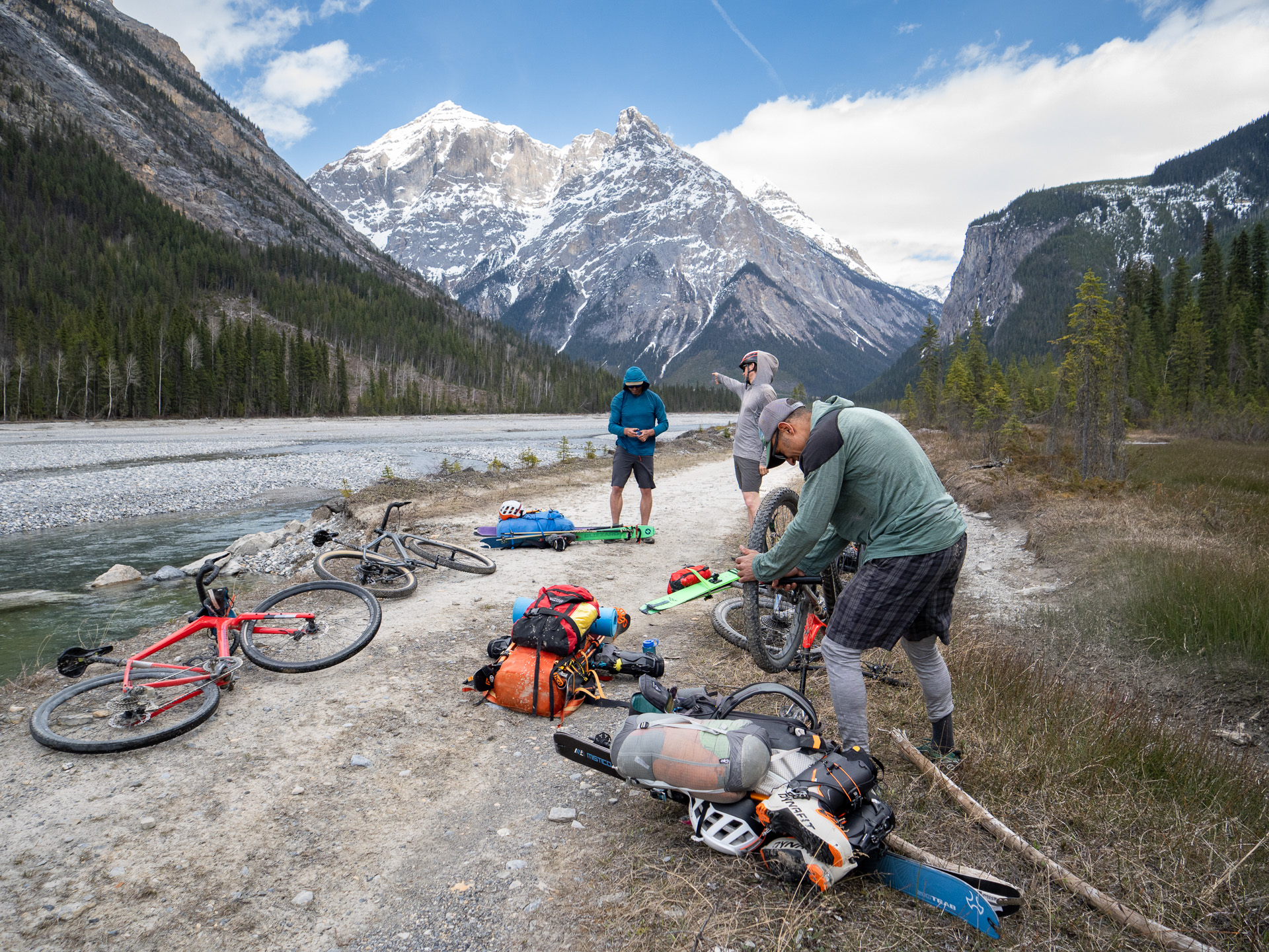
We stashed our bikes and crossed Icefall Brook’s wide gravel flats around the point where the flats, the west couloirs on Mt. Arras and the road all come together. From there it was surprisingly easy travel up the bouldery canyon that leads into the valley itself. No bushwhacking required as we reached the snow line at the top of the canyon and switched to skinning. As night fell, we built ourselves a comfortably bivy spot near treeline. It was a bit later than planned, but considering how far we had deviated from the original idea, things were going pretty damn well. After a fine day’s work, the team was perfectly positioned for an ascent of the Diamond Spur route on Icefall in the morning. We all slept like logs.
3 AM came early, but such is life in the spring. We headed up into the darkness, leaning on Ali’s local experience to help sniff our way through the moraines and onto the Diamond Glacier. Sunrise met us on the Spur itself, around the time we were belaying Marcus across a healthy looking bergschrund. Swapping leads was the best way to ensure progress with an awe inspiring backdrop distracting us the whole way. This area is astonishingly beautiful.

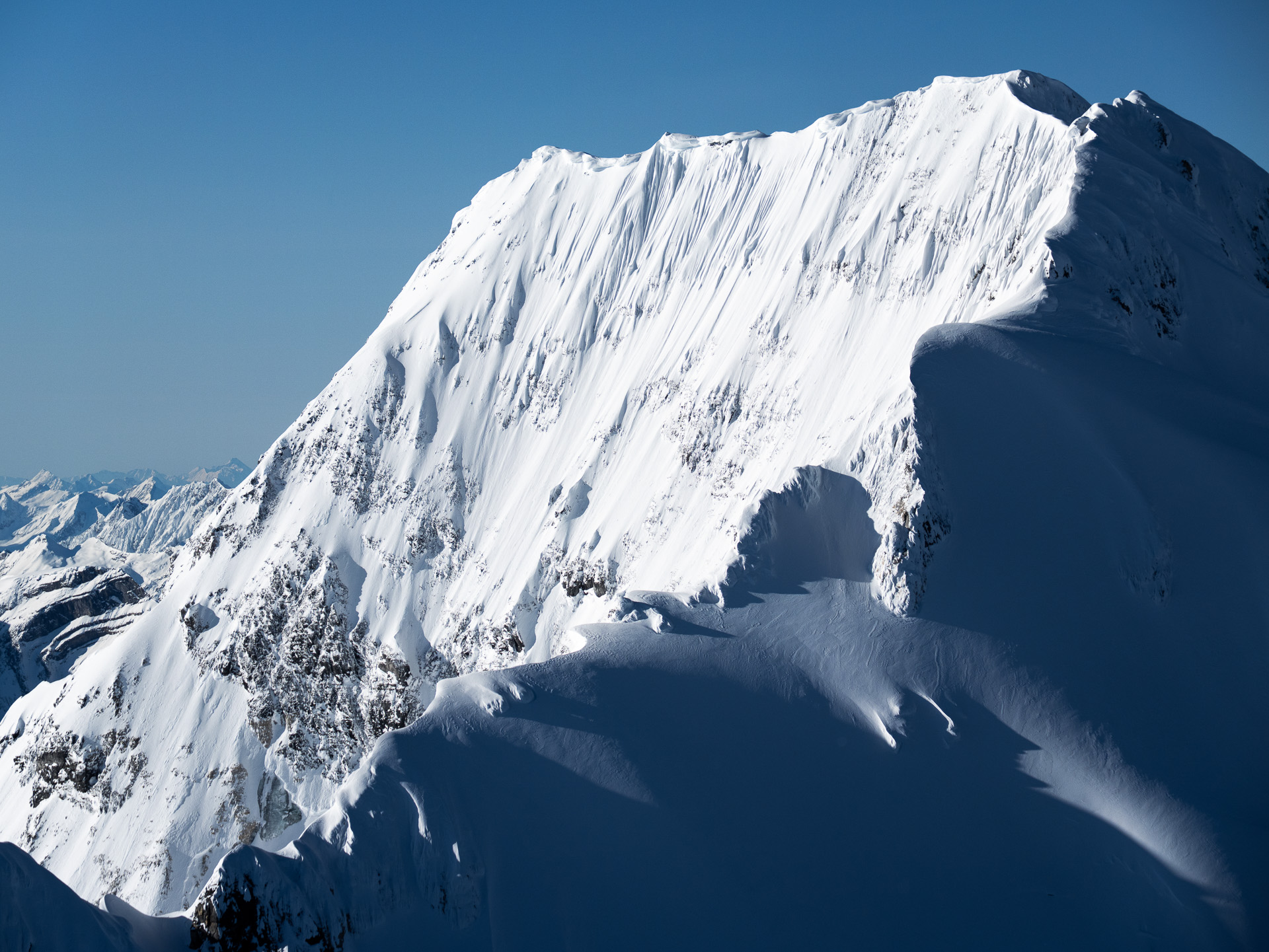
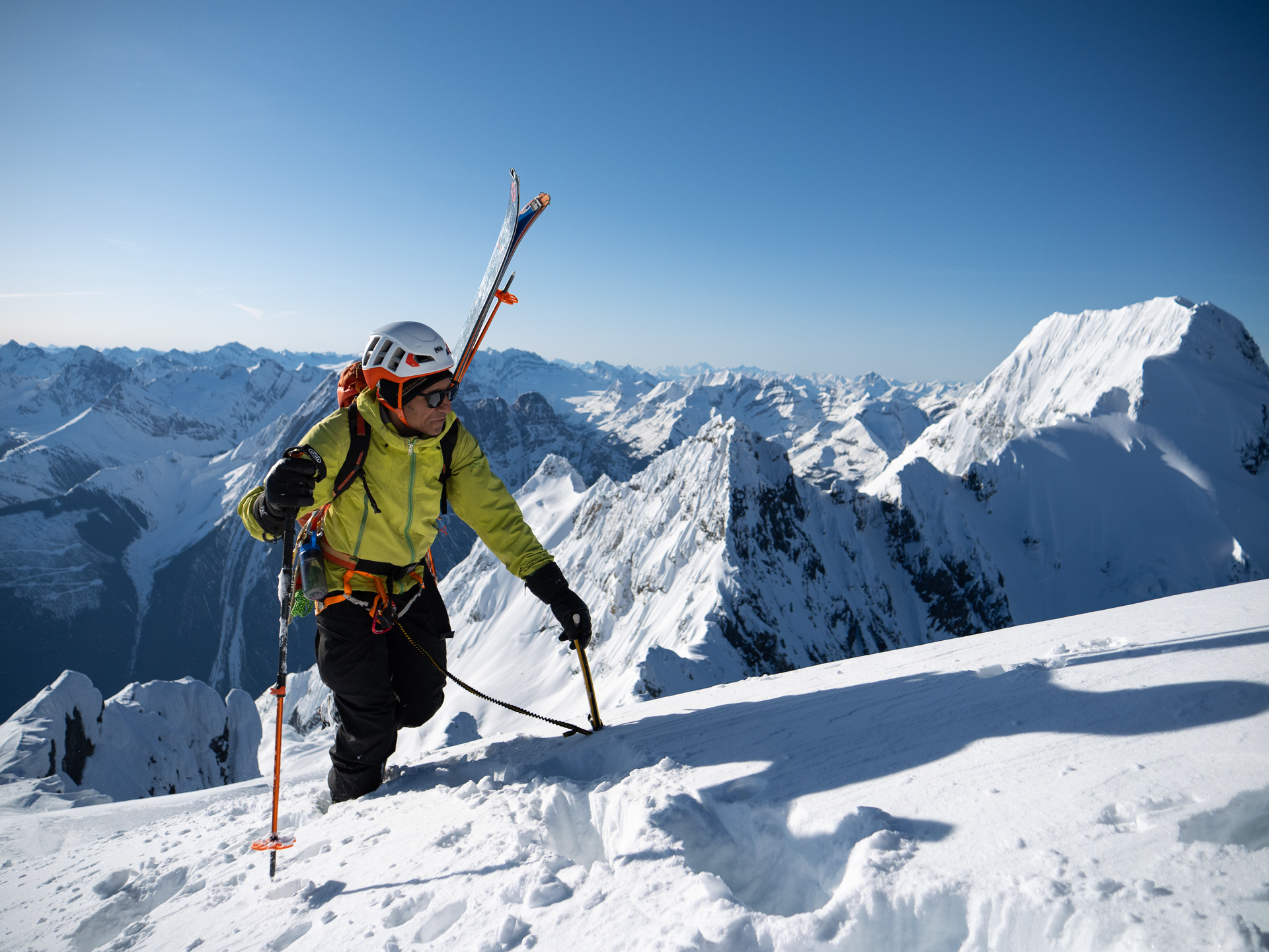
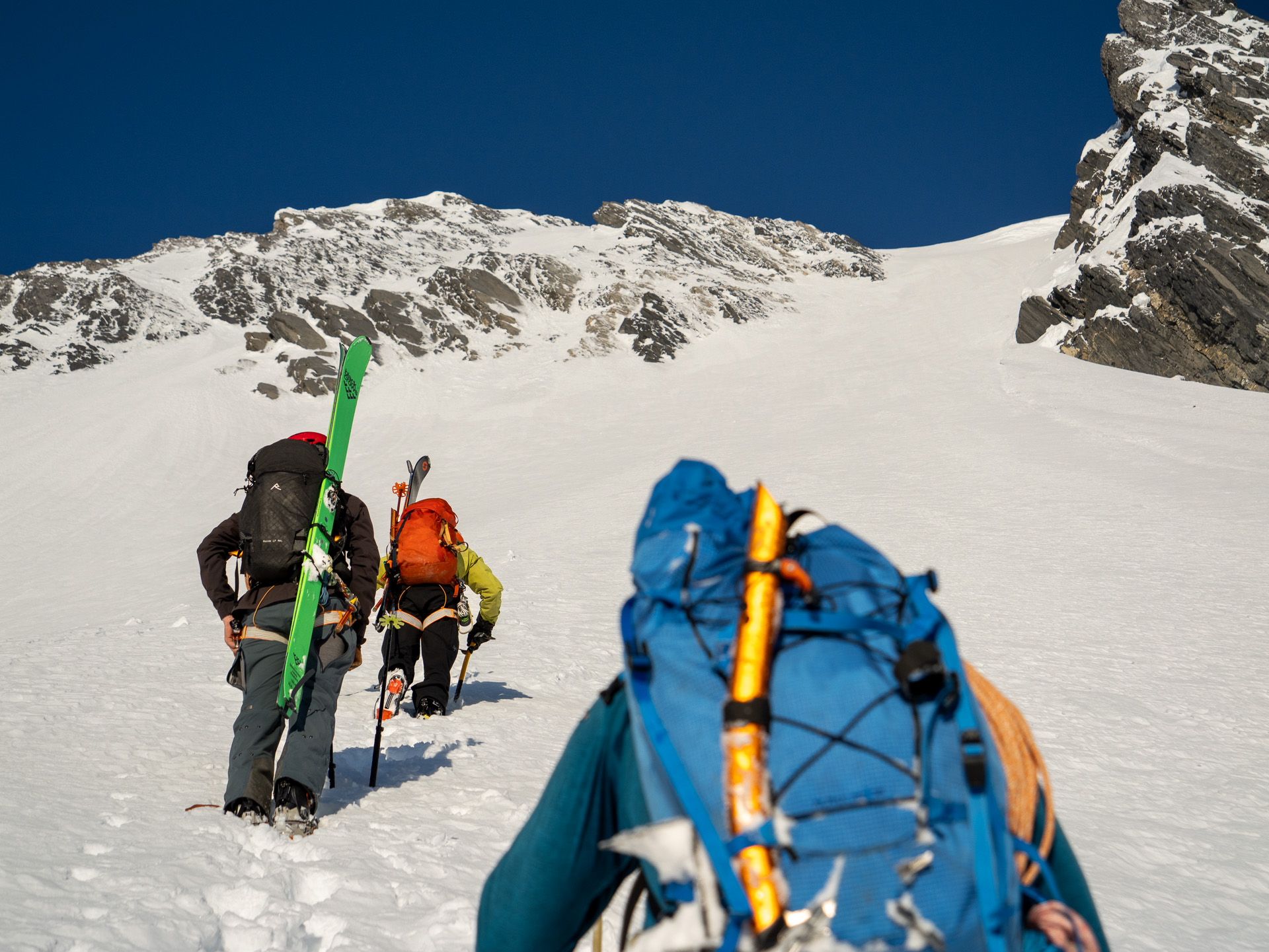
Our route gave us an opportunity to scope out the entrance to the north face, which looked completely reasonable from where we were standing. It does roll pretty steeply, but we had the advantage of beta photos that showed a diagonal halfpipe type feature interrupting the face just out of sight, where things would otherwise have been scariest. With the stoke rapidly building, we topped out on the gorgeous summit ridge with views of Kinbasket Lake and Sir Sandford to the west, Forbes, Mons and the Lyells to the east and a whole lot of huge, spectacular peaks in every other direction.
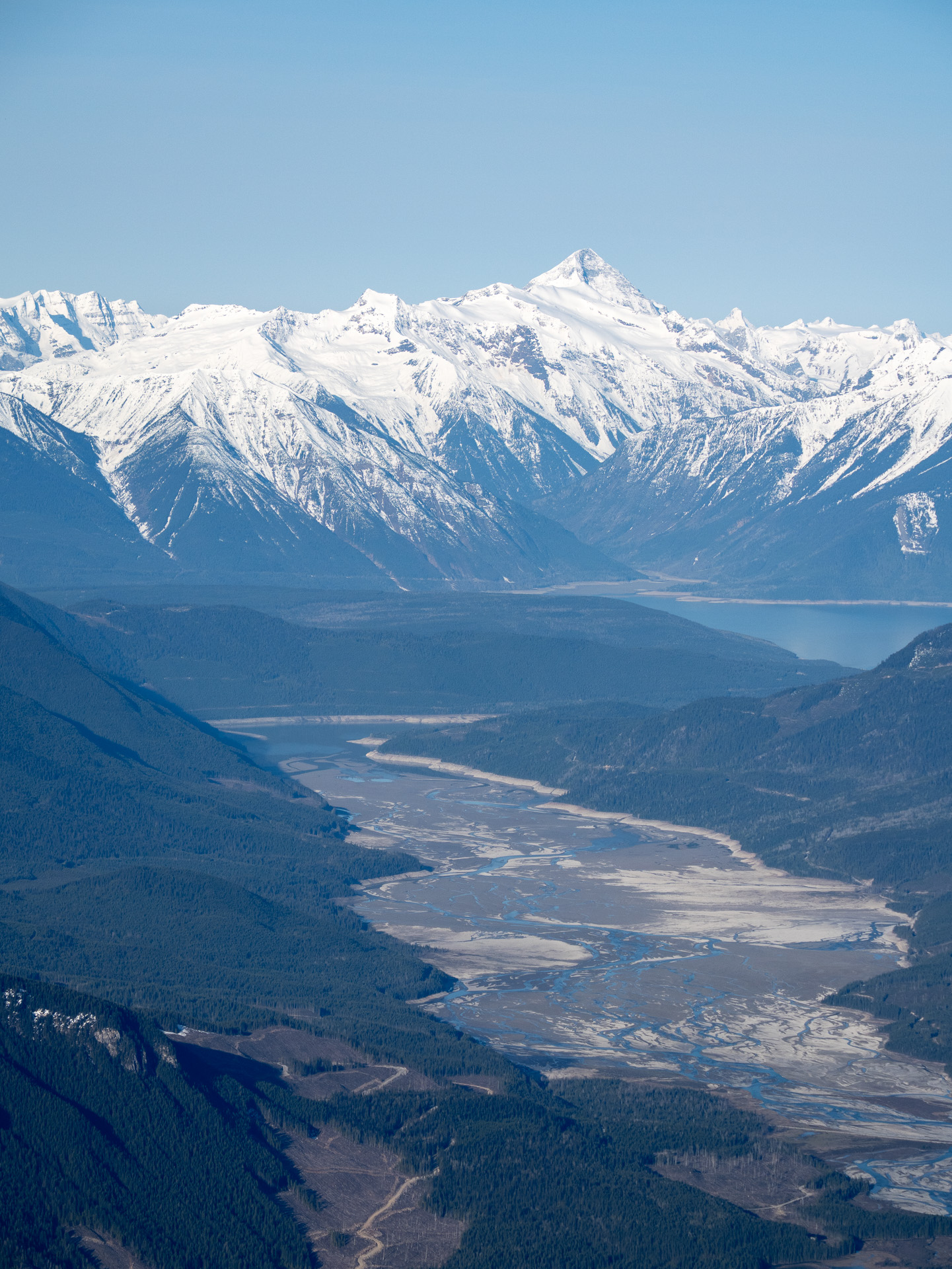
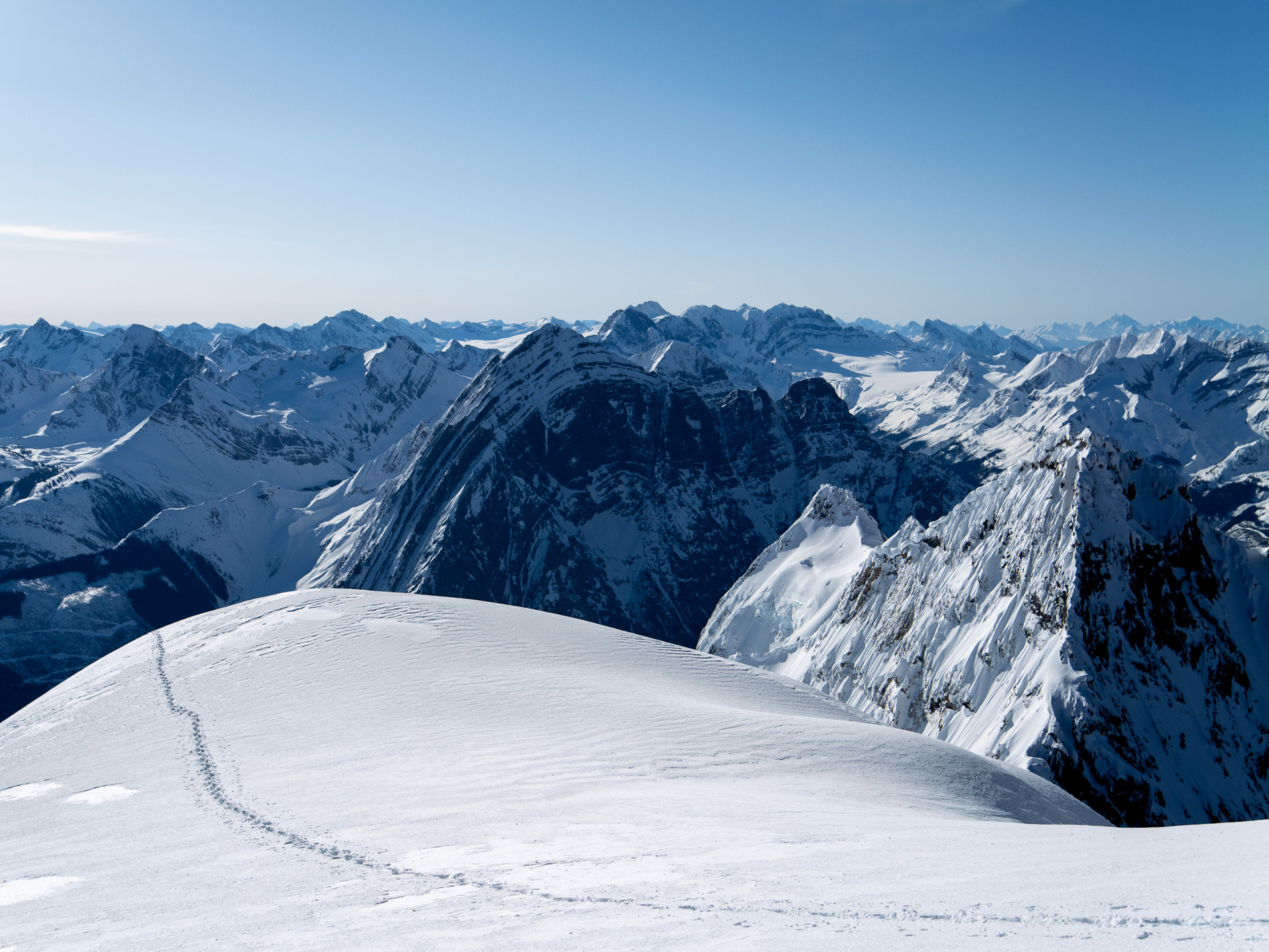
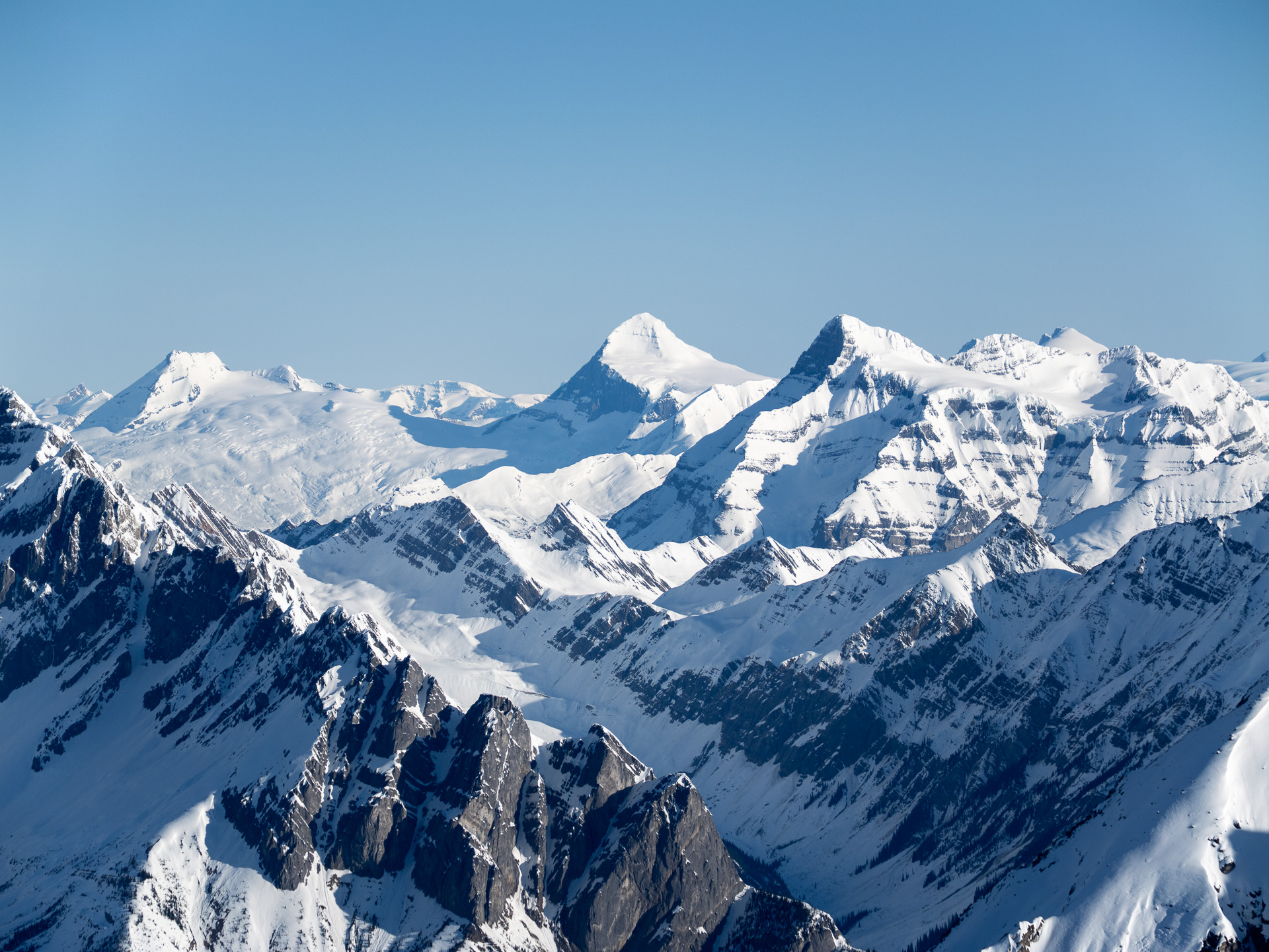
Left: Kinbasket Lake and Mount Sir Sandford. Upper Right: Arras with our bootpack in the foreground. Lower Right: King Edward, Columbia and Bryce standing tall.
The upper ice face was our primary concern for both stability and thinly buried ice. Ali opened the first few turns a bit to the skier’s right on the ridge. Marcus followed and then Andrew and I felt comfortable sticking to the centre of the face. Nice powder, sloughing fast on a planar alpine face. Can’t beat it. The whole group scooted across the glacial bench to the top of the halfpipe, which we could just about see the entirety of. It was good enough for me, and I got the absolute pleasure of opening the pitch. The snow was so good that it turned into the entire lower face at full speed. What a glorious experience. The pitch was quite moderate, and in those conditions the skiing really didn’t live up to the line’s fearsome reputation.
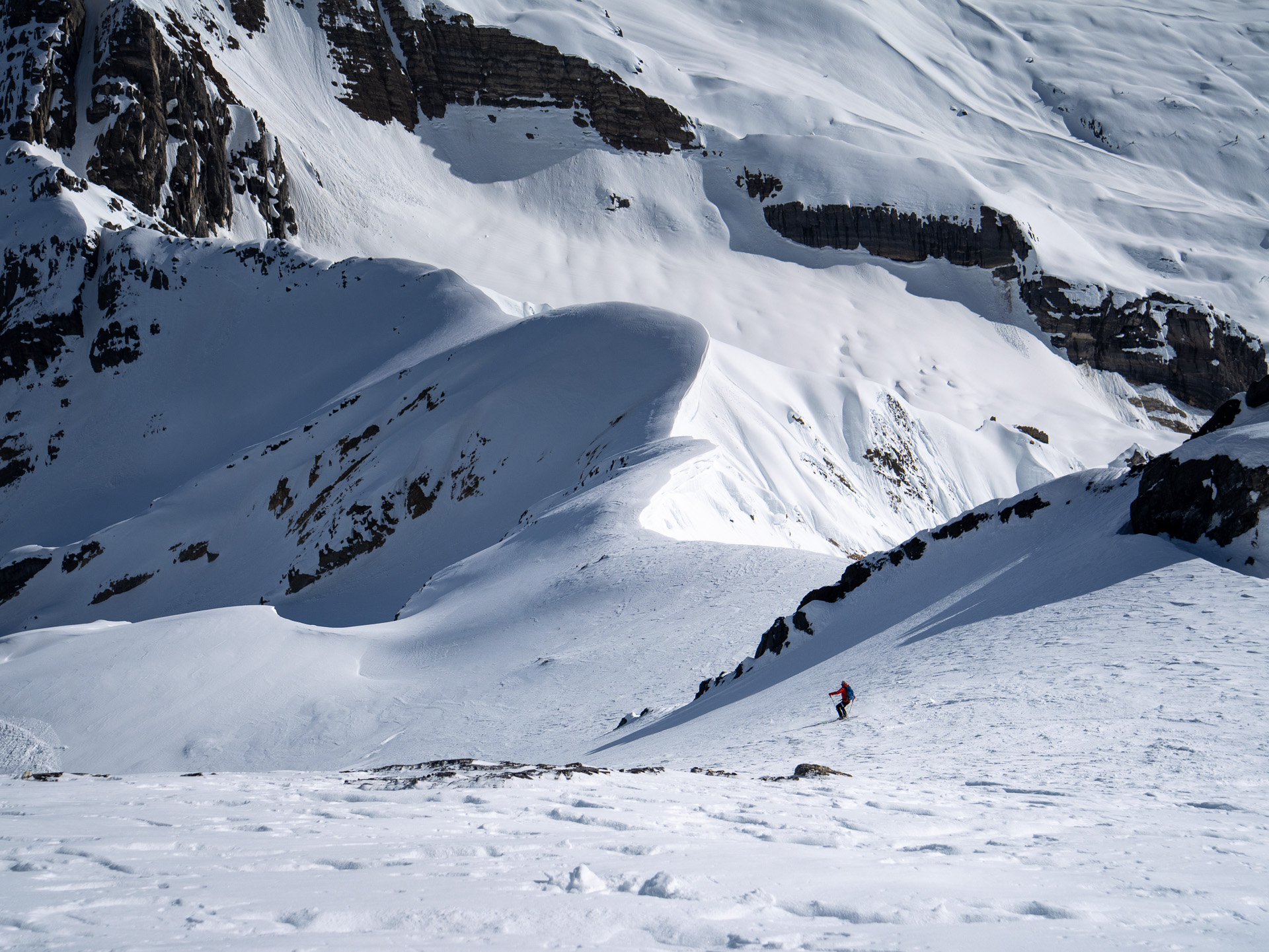
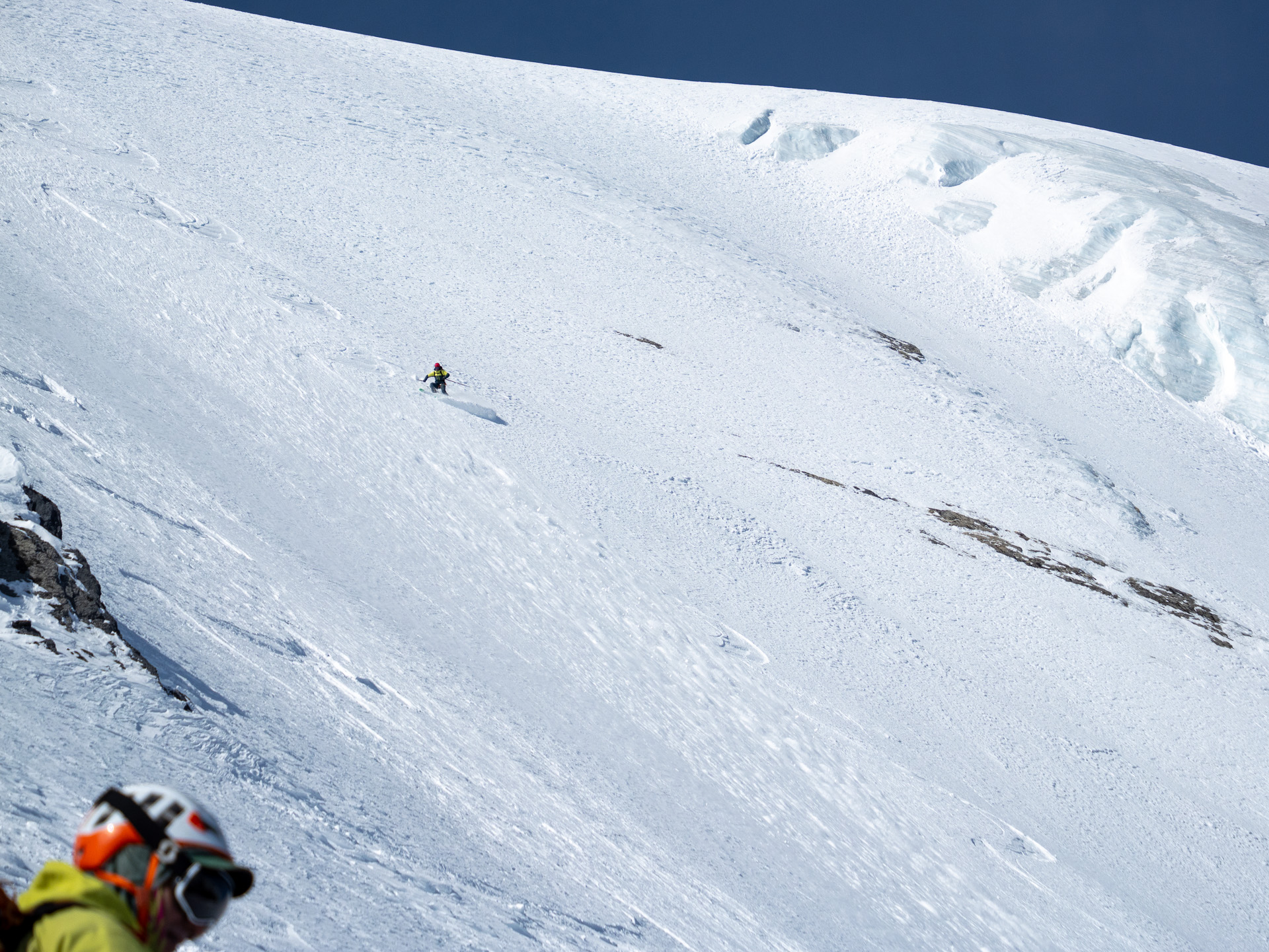
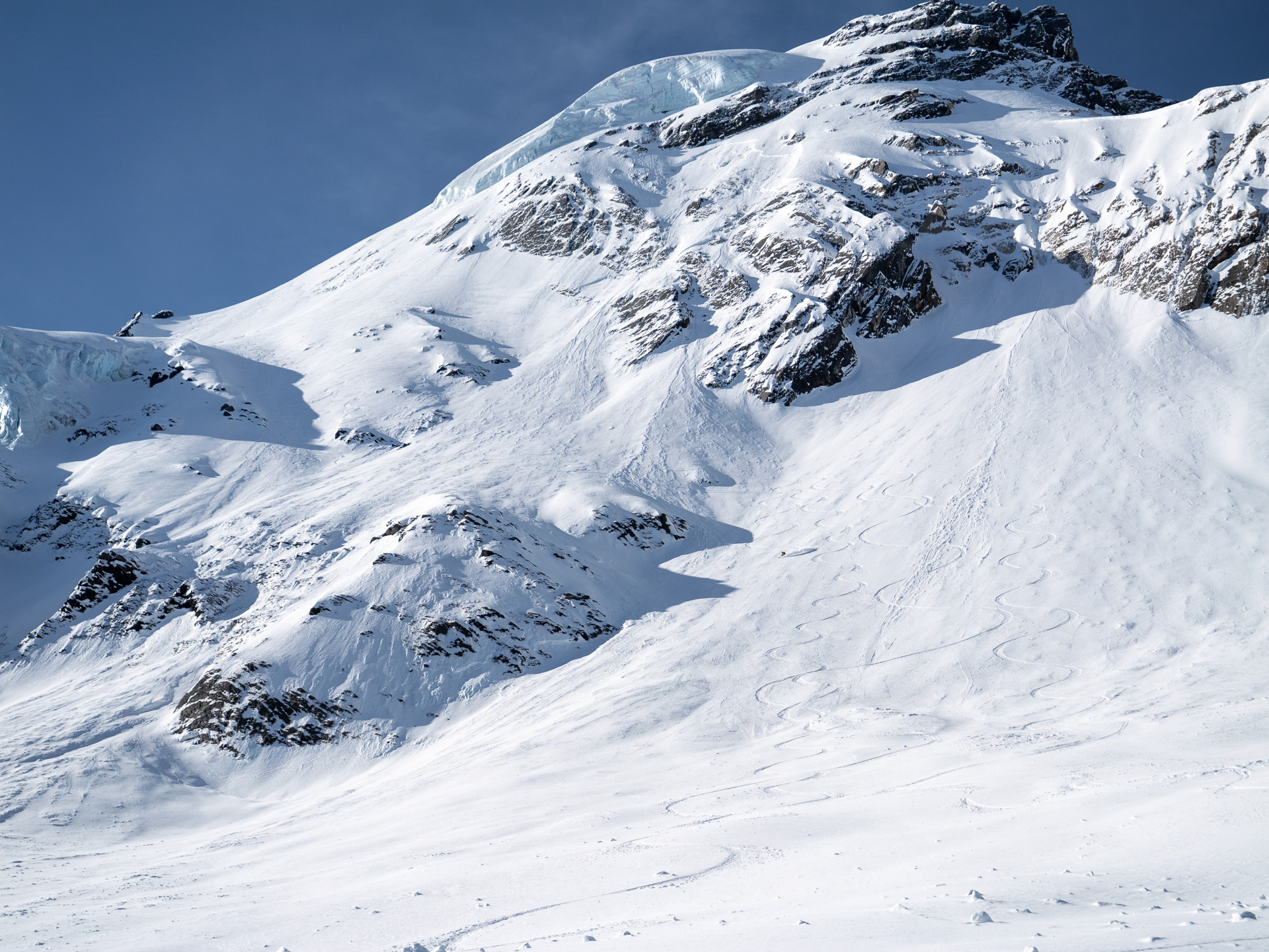
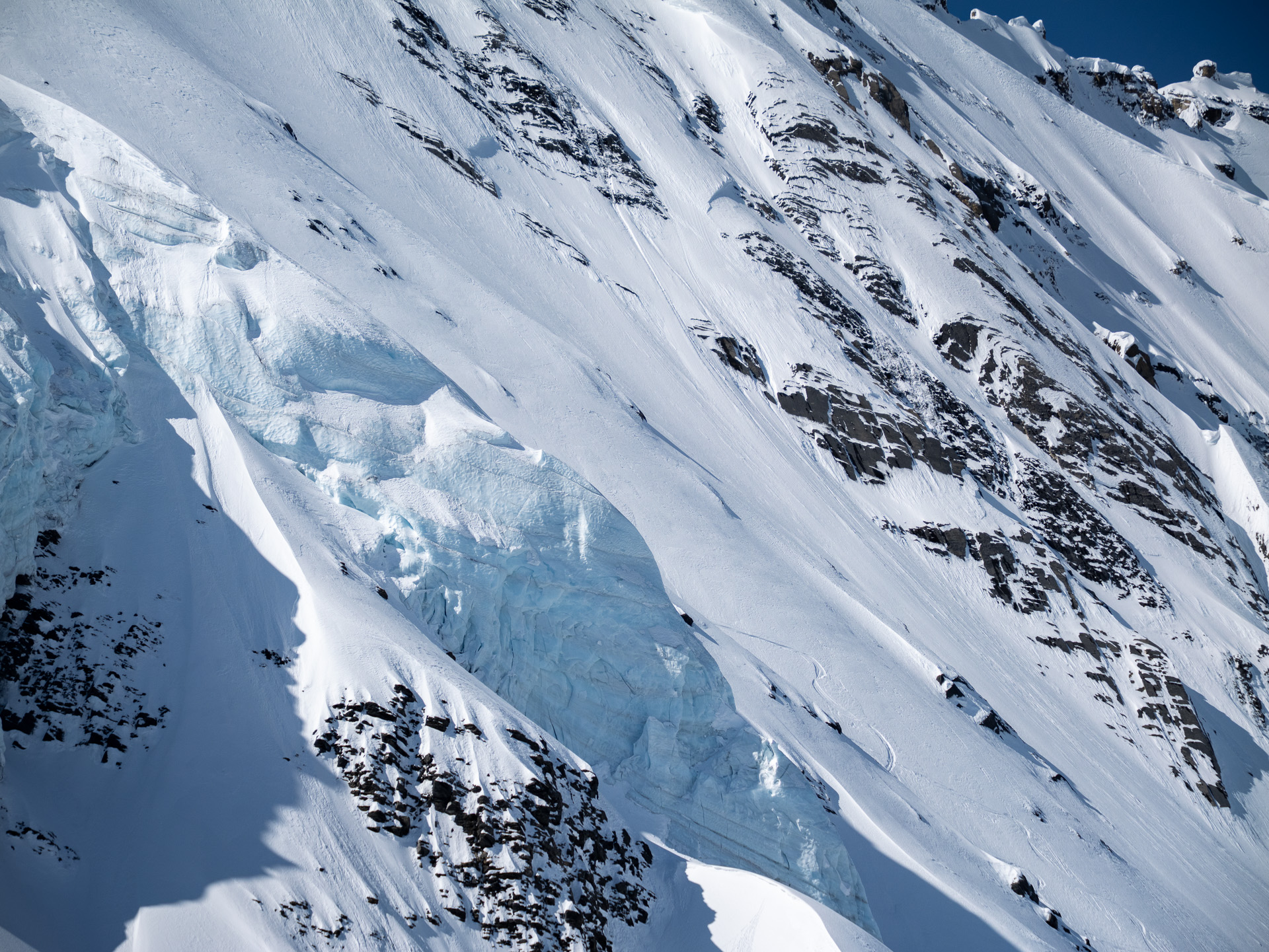
We were all pretty blown away that it allegedly hadn’t been skied, to the point where we all but assumed that it couldn’t be true. Our exit back over a col between Icefall and Ruby peaks was pretty straightforward, which gave us plenty of time to discuss the subject while looking back over at our tracks. Andrew hopped on a rope and found a diagonal gash leading back down to the Diamond Glacier. That was a bit lucky, as the col we were on was not the one we thought we’d been aiming for. Regardless, we skied back down the solar couloir without incident, but without much time to spare either. It was still only noonish, but things were getting hot. There was certainly no time to ski anything else of interest, but we did get a corn lap on the moraines to keep us entertained.
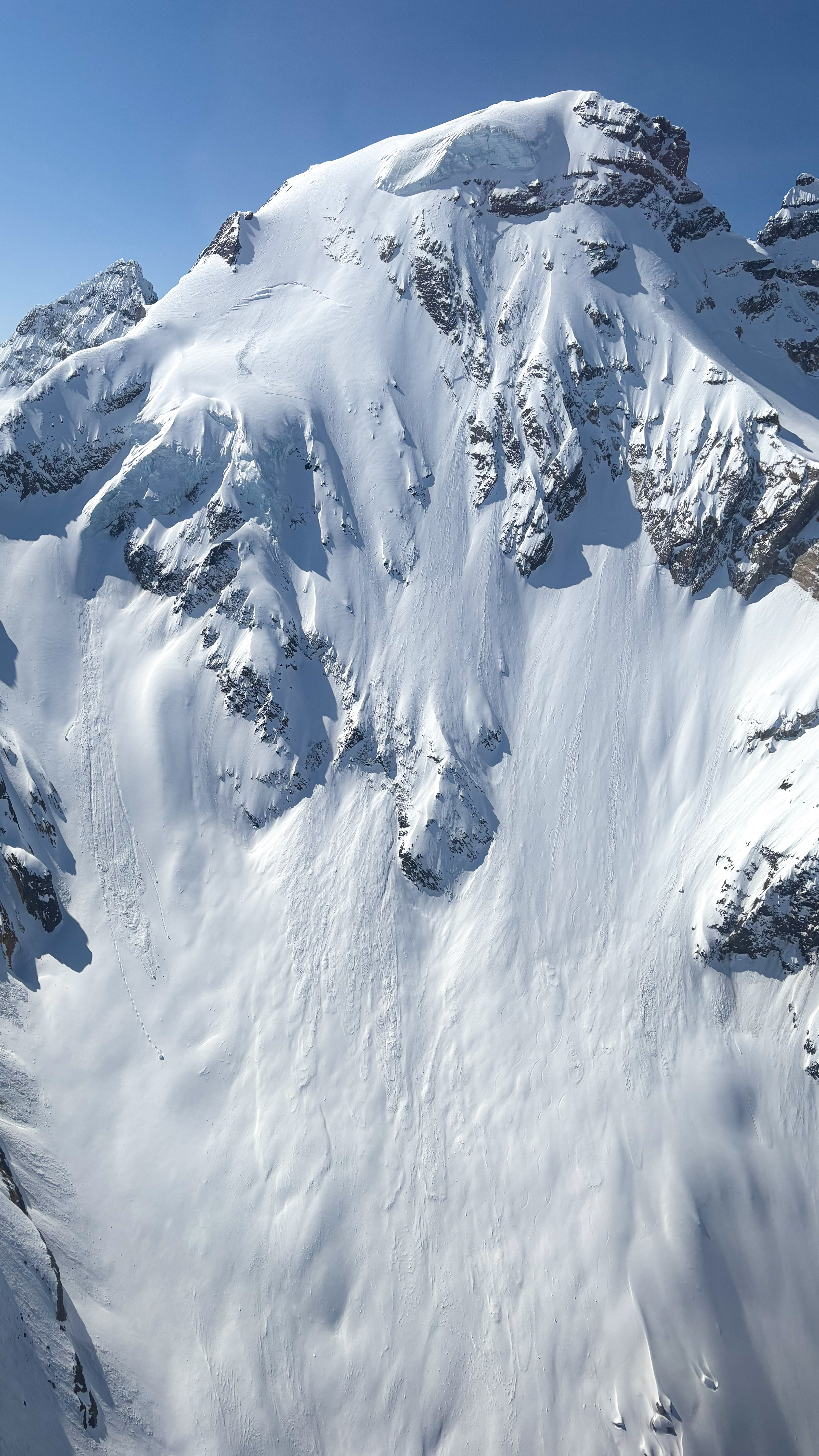
A full view of the face shot by friends exiting Icefall Lodge shortly after our descent. If you look closely you can see our tracks.
The afternoon was spent napping, eating and getting to bed early. We were hoping the forecast was wrong and that the incoming warming would hold off long enough for us to have a crack at the northeast face of Rostrum Peak. That never happened. The night was so warm I hardly had to zip up my sleeping bag, but we still scored ourselves a beautiful sunrise lap of the SE ridge of Mt. Kemmel before hightailing it down into the valley. The bike ride back out wasn’t bad at all, though we were amused to see that some large machine had plowed the avalanche debris off the road while we were gone. Maybe for tree planting access or something. So it goes – if you want the goods you have to put in the work, and we certainly got the goods.

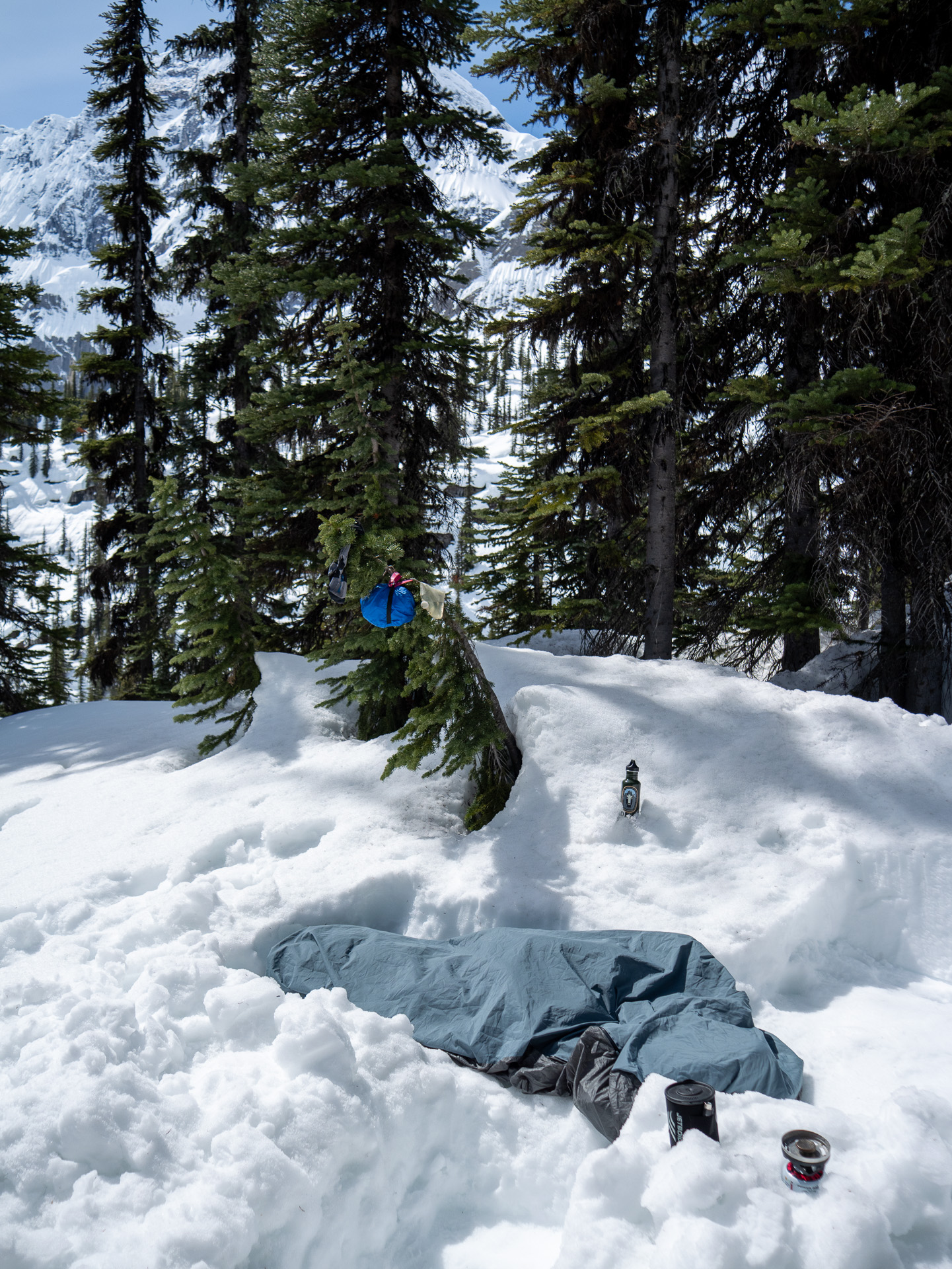
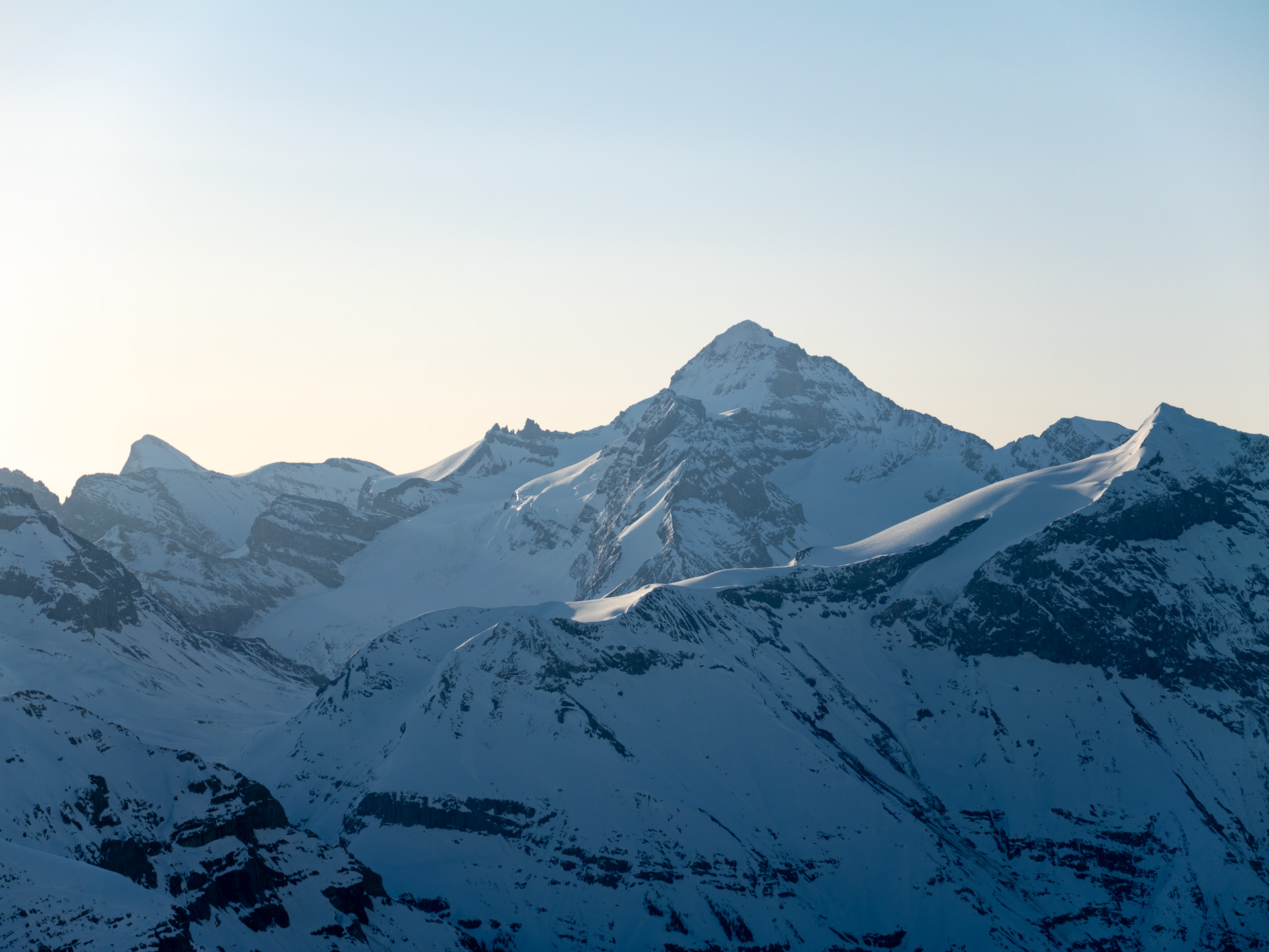

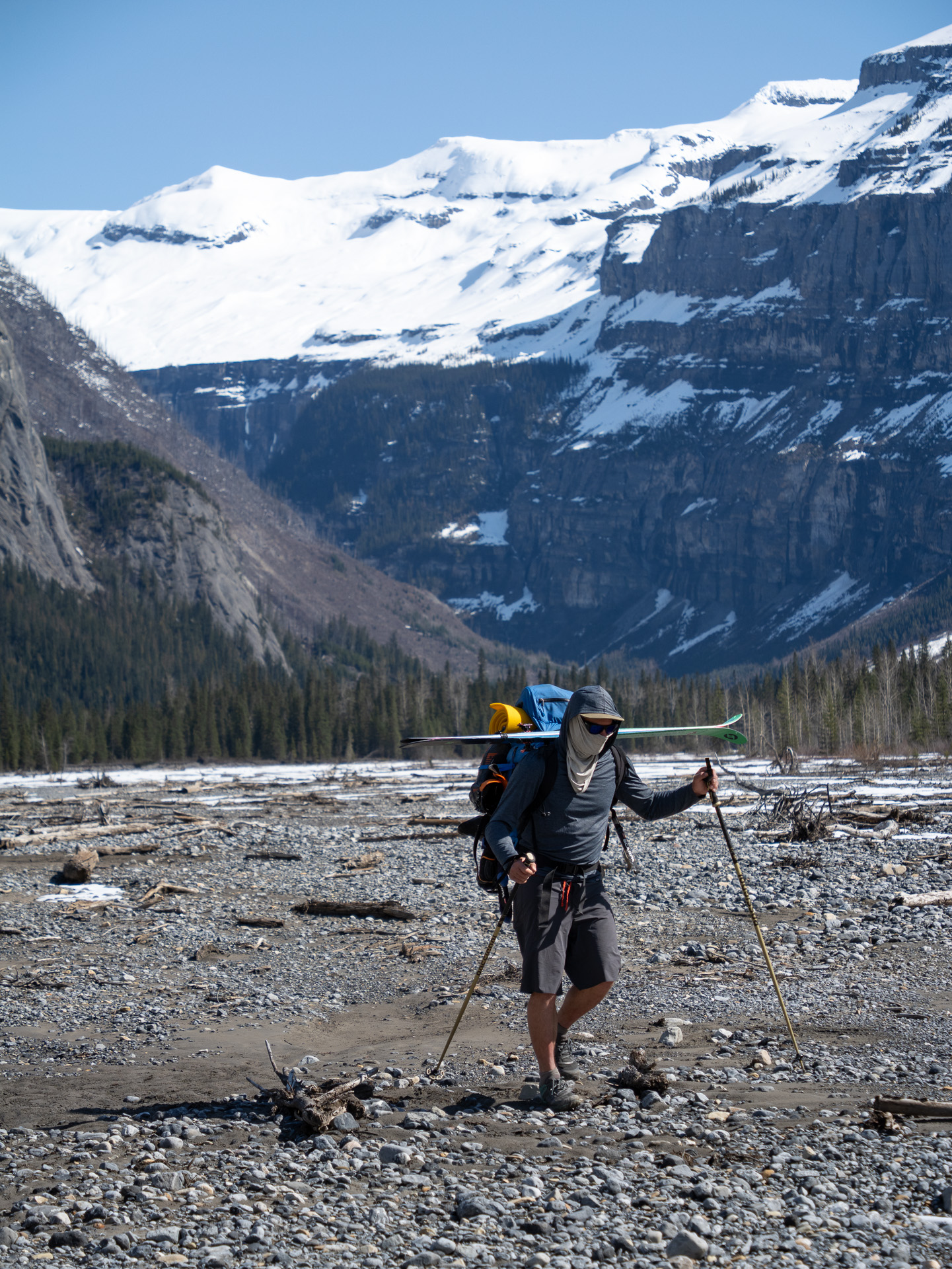
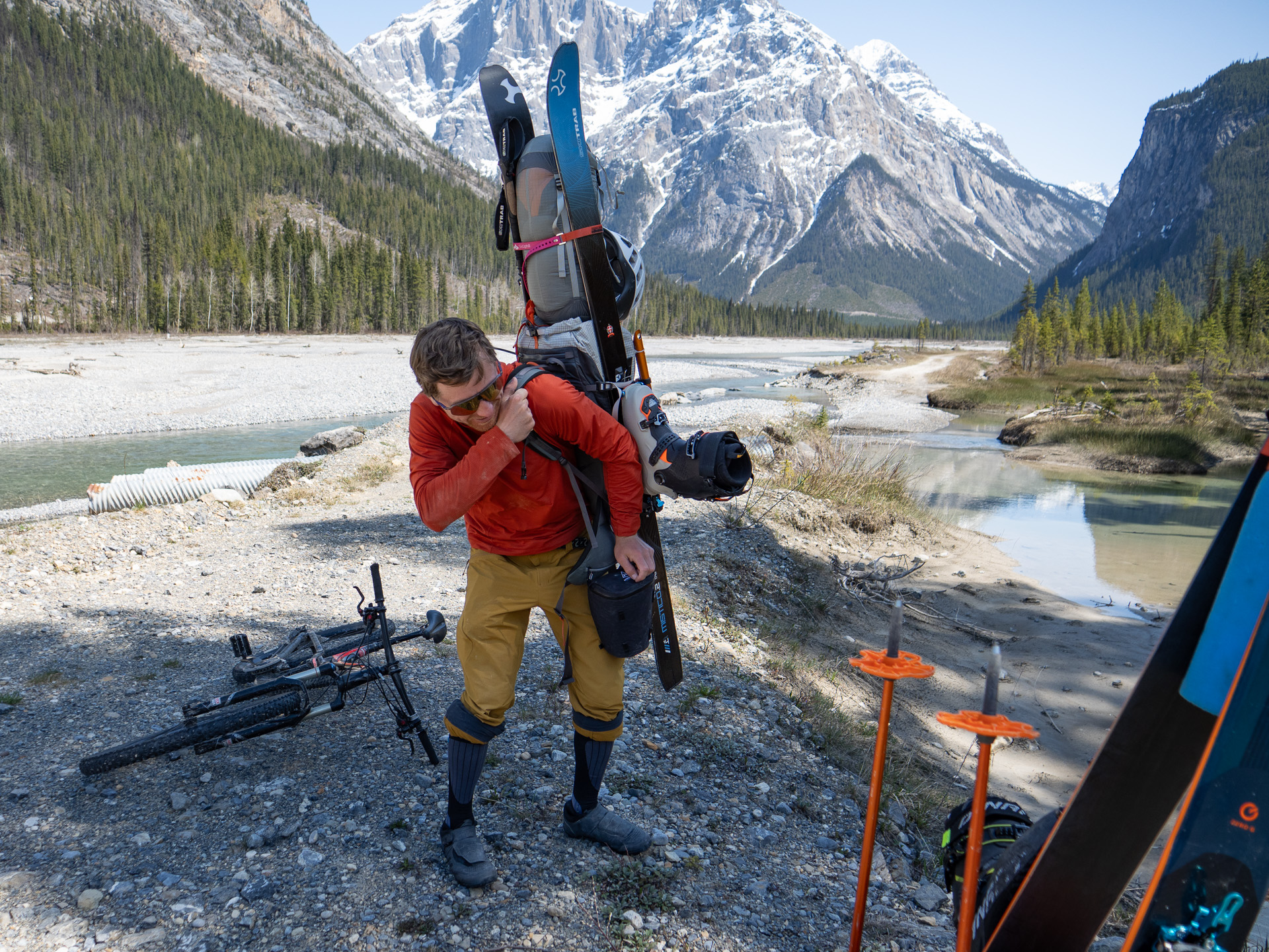

Some great images on this trip. In a place like this, it’s hard to take a bad photo.
Later, Larry of Icefall Lodge confirmed that, indeed, our tracks had been the first on this beautiful face. A nice surprise and it’s a testament to the strength of the crew and the power of good conditions that we got it done in such a pleasant way.
 Matt Ruta